Hi, I'm

Maria Djuric

Physics PhD · Deep Learning · Quantitative Modelling

Physics PhD at UCL specialising in deep learning, dynamical systems, stochastic modelling, and scientific computing.

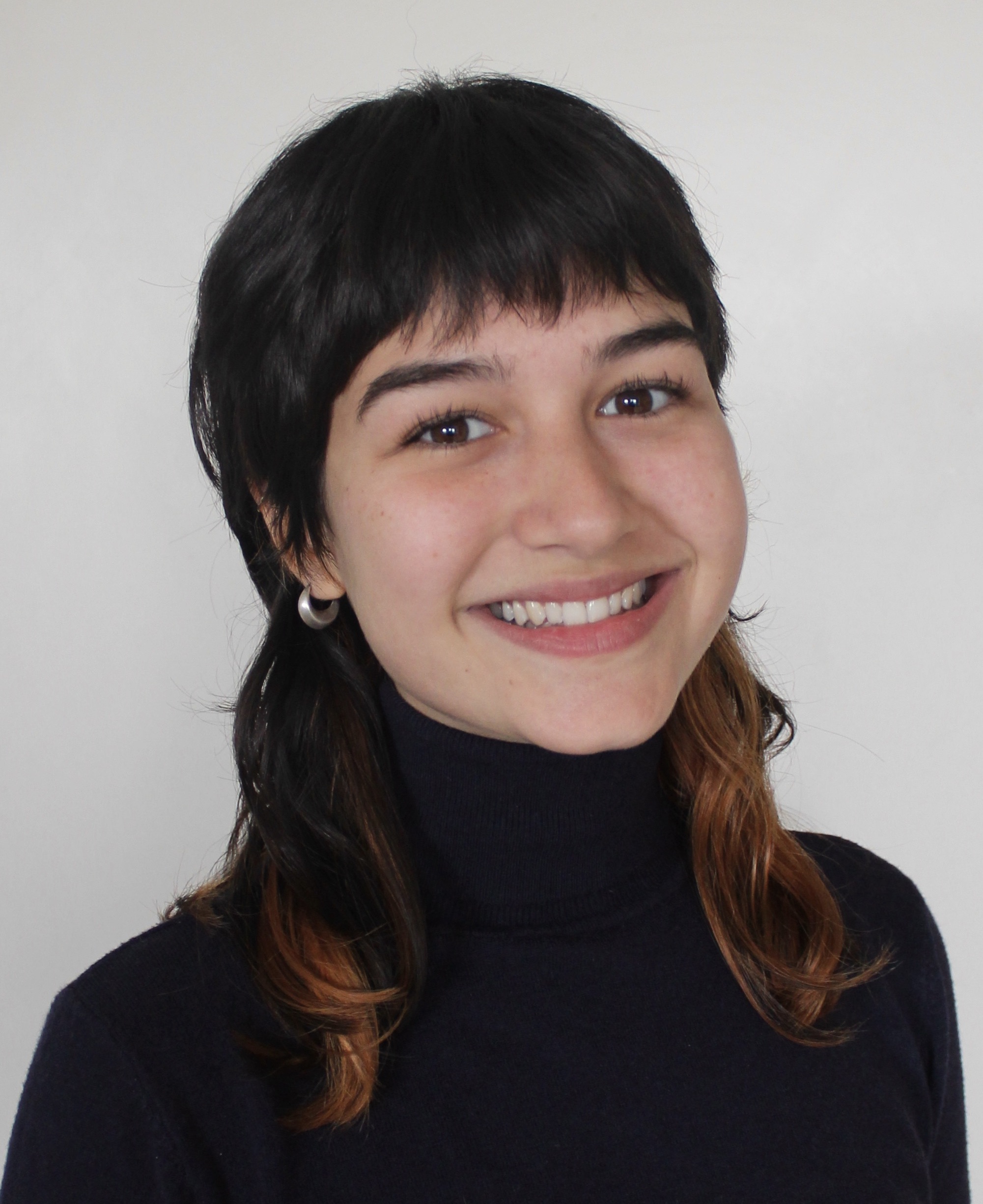
Portrait of Maria Djuric

About

I'm a Physics PhD researcher at University College London with a background in mathematics, physics, and scientific computing. My work sits between theory and computation: I like building models from abstract mathematical principles, that are numerically reliable, and actually useful in practice.

Recently I've been focusing on deep learning for Hamiltonian dynamics and action-angle coordinates, alongside broader quantitative modelling in nonlinear diffusion, stochastic calculus, and dynamical systems. I'm especially interested in interpretable machine learning for physical systems, efficient simulation pipelines, and research tools that make complicated models easier to test and trust.

Python NumPy SciPy PyTorch C++ Deep Learning Quantitative Modelling Astrophysics Data Analysis Stochastic Calculus Nonlinear Diffusion Hamiltonian Dynamics Scientific Computing NLP Embeddings
Projects

01

AAKoopmanTrain

PyTorch model for learning action-angle coordinates and Hamiltonian dynamics with Koopman autoencoder and symplectic deep learning approaches. Built to support reusable training, evaluation, diagnostics, and reproducible comparison against analytical and numerical baselines.

PyTorchDeep LearningHamiltonian DynamicsPhD Research

02

FMAP: FindMyArxivPaper

An paper-finder that fetches astro-ph papers from arXiv, embeds title+abstract text, trains a category classifier, evaluates retrieval, and generates an interactive UMAP-based HTML map for browsing scientific papers as a dense local atlas.

PythonNLP EmbeddingsUMAPAstrophysicsInteractive Visualization

03

Deep Learning for Hamiltonian Dynamics

Research project at UCL developing Koopman autoencoder and symplectic learning models to recover action-angle coordinates from Hamiltonian trajectories, with benchmarking against analytical and numerical methods down to very small errors.

PyTorchDynamical SystemsAction-Angle CoordinatesModel Evaluation

Blog

.

Learning action-angle coordinates with a Koopman-inspired symplectic autoencoder

New

A short research note on learning action-angle coordinates and orbital frequencies from trajectories with a symplectic Koopman-style autoencoder, showing only the 1D harmonic-oscillator and isothermal-slab tests for now.

FMAP v2: comparing a SciBERT classifier against the v1 TF-IDF baseline on astro-ph arXiv data

New

A side-by-side comparison of FMAP v1 and v2 on real astro-ph arXiv ingestion data, covering accuracy, macro F1, per-class differences, and the practical tradeoffs between a fast classical baseline and transformer fine-tuning.

Building FMAP: an interactive astro-ph paper atlas with embeddings, UMAP, and arXiv metadata

New

A full write-up of the FMAP project: arXiv ingestion, TF-IDF + LinearSVC classification, sentence-transformer embeddings, UMAP map construction, evaluation plots, and an embedded interactive atlas.

Awards

2022–2025

UCL Graduate Research Scholarship (GRS)

Full international tuition support and annual stipend.

2022

Bok Prize, Astronomical Society of Australia

Awarded for outstanding research in Honours research in astronomy.

2022

Henry Chamberlain Russell Prize in Astronomy, University of Sydney

Awarded for excellence in astronomy.

2021

University Medal, University of Sydney

Awarded for outstanding academic achievement in the Bachelor of Science (Advanced) degree.

2021

Physics Foundation Scholarship No III, University of Sydney

Awarded for academic excellence in physics.

Research & experience

Deep Learning Model for Hamiltonian Dynamics and Action-Angle Coordinates

University College London

2025–2026

  • Developed PyTorch Koopman autoencoder and symplectic deep learning models to learn action-angle coordinates from Hamiltonian trajectories.
  • Benchmarked model outputs against numerical and analytical methods, reproducing results efficiently with errors at the 10^-4 level.
  • Built reusable training, evaluation, and diagnostics pipelines to support model comparison, validation, and experiment reproducibility.

Steady-State Equilibrium Distribution Functions for the Milky Way

University College London

2023–2025

  • Built quantitative models for complex dynamical systems using stochastic calculus, partial differential equations, and nonlinear diffusion methods.
  • Implemented Python-based solvers for the Fokker–Planck equation, analysing equilibrium distributions, stability, and sensitivity to modelling assumptions.
  • Obtained modified self-consistent distribution functions within a physically constrained framework and tested their numerical stability and consistency.

Vertical Phase-Space Spirals in the Milky Way

University College London

2022–2023

  • Built test-particle simulations in C++ to model vertical phase-space spirals generated by large-scale perturbations in the Galactic disc.
  • Compared simulations with observational stellar data by selecting age-consistent subgiant samples from survey catalogues.

Private Tutor — Mathematics and Physics

Independent

2017–Present

  • Tutored mathematics and physics across a range of levels, translating technical ideas into clear, structured explanations.
  • Worked one-to-one with students over multiple years, adapting explanations to different learning styles and goals.

Education

University College London

Doctor of Philosophy (PhD)

2022–Present

  • Physics PhD based in London.
  • Research in deep learning, Hamiltonian dynamics, stochastic modelling, and astrophysical dynamical systems.
  • Supported by the UCL Graduate Research Scholarship (GRS).

University of Sydney

Bachelor of Science (Advanced) / Bachelor of Advanced Studies (Honours)

2018–2021

  • Major in Mathematics and Physics.
  • First Class Honours in Physics.
  • 93 average mark.